

好(す)きなことを続(つづ)けていると、難(むずか)しいこともできるようになりますね。
Grammar: ようになる (youni naru)
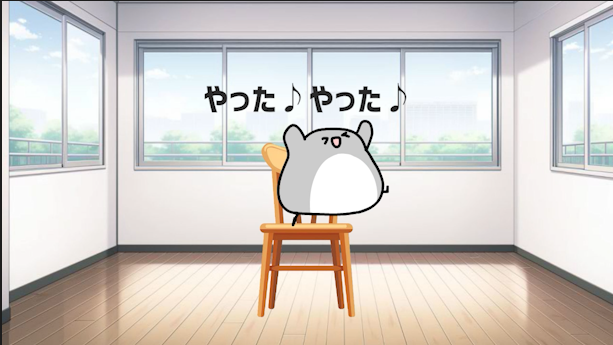
何かができるようになるとうれしいですね。
Change is constant, isn’t it? We learn new things, develop new habits, and the world around us shifts. In Japanese, the phrase ようになる is used to express change.
Key point: Understanding 「ようになる」
ようになる is a wonderfully versatile Japanese phrase that is good at expressing the idea of change and development. It is very essential phrase when you want to express that someone has acquired a new skill or ability, like finally being able to speak English fluently, or that an environment or situation has altered from its previous state.
Meanings
- has come to be
- has become able to
- has started to
Sentence Construction
- Use the dictionary form of the verb before “ようになる” (youni naru).
- Dictionary form + ようになる
読むようになる
- Dictionary form + ようになる
- When used with regular verbs, ようになる indicates a change in habit or situation, while with potential verbs, it shows a change in ability.
- 読むようになる (Yomu you ni naru)
To come to read - 読めるようになる (Yomeru you ni naru)
To come to be able to read
- 読むようになる (Yomu you ni naru)
Example Sentences
練習したら、できるようになります。
(Renshū shitara, dekiru yō ni narimasu.)
If you practice, you’ll be able to do it.
最近はロボットが車を運転するようになった。
(Saikin wa robotto ga kuruma o unten suru yō ni natta.)
Recently, robots have started driving cars.
しなくなる(shi naku naru)
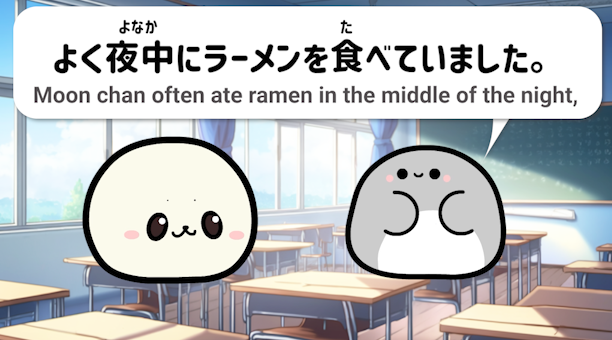
ムーンちゃんはよく夜中にラーメンを食べていました。しかし、いまは…
Key points: Understanding 「しなくなる」
「しなくなる」 is the perfect phrase to convey that an action or habit, particularly one you used to do regularly, has now stopped. It’s commonly used when discussing the discontinuation of activities, whether they were bad habits like eating too much or just things you no longer have the time or ability to do.
Meanings
- to stop doing
- to no longer do
Sentence Construction
- Root of ない form + なくなる
読まない is the ない form of 読む.
Root of the verb is 読ま. - 読まなくなる(Yoma naku naru)
To stop reading
Example Sentences
おやつをたくさん食べなくなった。
(Oyatsu o takusan tabe naku natta.)
I stopped eating a lot of snacks.
Vocabulary
- 覚える (Oboeru): to memorize; to remember; to learn
- 最近 (Saikin): recently; lately
- がんばっている (Ganbatteiru): trying hard; doing one’s best; working hard
- すごい (Sugoi): amazing; incredible; great; awesome
- うどん (Udon): udon noodles
- ちょっとずつ (Chotto zutsu): little by little; bit by bit
- 携帯電話 (Keitai denwa): cell phone; mobile phone
- ロボット (Robotto): robot
- 運転する (Unten suru): to drive
- 練習する (Renshū suru): to practice


Leave a Reply